
Campspot: RV & Tent Camping
CampspotTravel & Local
4.7676.00 Reviews
- Version
- 1.55.0
- Installs
- 500.00K
- Age Rating
- Everyone
Screenshots
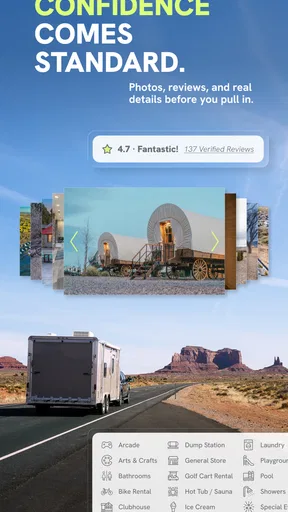
Our Review of Campspot: RV & Tent Camping
 Analysis by Appyee
Planning a camping trip often starts with a vague idea: find somewhere pleasant, check whether there is space, and work out the practical details before the weekend disappears. Campspot: RV & Tent Camping is built around that exact moment. I found it most useful as a focused travel and local app for discovering campground stays and moving from browsing to booking without jumping between several unrelated services. Its main strength is not trying to be a complete outdoor companion; it is giving campground reservations a dedicated place.
That focus makes a real difference when I already know roughly where I want to go but do not want to phone several campgrounds one by one. I can use the app to explore available stays, compare the options presented for a destination, and make a more informed choice before committing. The experience feels especially suited to RV travelers and tent campers who prefer organizing the practical side of a trip on a phone.
Developed by Campspot, this free app sits in the Travel & Local category and is suitable for everyone. Its average rating is 4.7 from around 7 thousand ratings, while the app has passed 500 thousand installs. Those figures suggest that it has found a clear audience, but I would not treat popularity as a substitute for checking every reservation detail. Camping plans are too dependent on dates, equipment, site rules, and location-specific conditions for any booking tool to remove all responsibility from the traveler.
Where the app earns its place in a camping trip
I find this section most useful for deciding whether Campspot belongs in my planning routine, rather than treating it as a one-off search tool. A good next step is to save the kind of campground details that matter most to your group before browsing, so you can judge each option against real needs instead of the excitement of finding an opening. That practical test leads naturally to the question of when another approach may serve you better.
A more direct starting point than general travel search
My first impression is that Campspot makes more sense when the destination is a campground rather than a hotel, attraction, or broad vacation area. General travel apps can be useful for accommodation research, but they often make camping feel like an exception to the normal hotel workflow. A dedicated campground service keeps the search centered on the things that matter to campers: the type of stay, the location, the dates, and whether a suitable place can be reserved.
That narrow purpose is also the app’s clearest advantage over ordinary web searches. Searching the open web can produce campground websites, map results, social posts, and outdated references all at once. I prefer starting with a structured camping search because it reduces the time spent sorting through pages that may not lead to a reservation. Once I have a promising option, I can still investigate the surrounding area separately.
The app is not a replacement for trip planning in general. It does not turn a reservation into a complete itinerary, and I would not use it as my only source for road conditions, local activities, weather, or emergency preparation. Instead, I see it as the booking layer of a larger plan. That distinction is important: Campspot can help me secure a place to stay, but it does not make the rest of the trip automatically simple.
The useful workflow: search broadly, then verify narrowly
A practical way to use the app is to begin with flexible expectations. I would search the intended area and dates first, then compare the available campground choices before becoming attached to one particular site. This approach is more productive than deciding on a single campground and assuming it will have the right availability. Camping inventory can be more limited than hotel inventory, so flexibility often matters more than finding the perfect-looking result immediately.
After finding a candidate, I would slow down and read the details rather than treating the first attractive listing as an automatic match. For an RV stay, I would pay close attention to whether the site suits the vehicle and setup I am bringing. For tent camping, I would consider the amount of space, the expected surroundings, and whether the arrangement fits the way I actually camp. The app can support the reservation process, but the traveler still needs to match the booking to real equipment and expectations.
This is one of the less obvious strengths of a dedicated camping platform: it encourages me to think in terms of a stay type rather than simply a room. That sounds small, but it changes the questions I ask. Instead of only looking for the lowest displayed cost or the closest location, I am more likely to consider whether the site works for my particular camping style.
A realistic weekend scenario
Imagine I decide on a last-minute weekend outside the city after a busy workweek. I know I want to sleep in a tent, but I have not chosen a campground and do not want to spend the evening calling individual offices. I can open Campspot, search the area, review the available stays, and narrow the results to places that appear appropriate for the dates. If the first choices do not fit, I can adjust the location or timing instead of assuming the entire trip is impossible.
Once I find a suitable option, I would use the reservation information as a checklist for the rest of the trip. I would confirm the arrival details, note anything relevant to the site, and then separately prepare food, lighting, navigation, and weather-appropriate clothing. The app saves time at the point where accommodation research is usually fragmented, but it does not replace the physical preparation that makes a camping weekend comfortable.
For an RV traveler, the same workflow can be even more valuable because a poor site match can create a bigger problem than an inconvenient tent pitch. I would search early, compare the available choices, and verify that the selected stay fits the vehicle before finalizing anything. The time saved by finding an available campground is not worth much if the reservation is unsuitable for the rig.
What I would check before pressing the booking button
I recommend treating every reservation as a small verification exercise. First, I would confirm the dates and the number of travelers. Next, I would make sure the selected accommodation type matches the equipment I am bringing. Then I would read the campground-specific information carefully, especially anything that affects arrival, site suitability, or the practical experience of staying there.
I would also keep the confirmation accessible after booking rather than assuming I will remember every detail. A screenshot or saved reference can be useful when arriving with limited signal, although I would not rely on the phone alone for navigation or essential travel information. This is a simple habit, but it addresses a common weakness of mobile booking: the reservation may be easy to make and harder to retrieve when circumstances are less convenient.
Another useful habit is to compare the app’s result with the campground’s own current information when the trip is important. I do not mean abandoning Campspot; I mean using a second check for details that could affect the journey. A dedicated booking app gives me a strong starting point, while the campground’s own instructions may clarify local expectations that are easy to overlook during a quick search.
The meaningful limitation: discovery is not the same as certainty
My main reservation is that a clean booking experience can create a false sense of completeness. Seeing a campground presented in an organized way makes it tempting to assume that I understand the entire stay. In reality, the quality of a camping trip depends on details that are often highly specific to the property and the date. The app can help me find and reserve a stay, but I still need to read carefully and plan for conditions outside the booking screen.
This matters most for travelers with strict requirements. If I need a very particular site configuration, have a large RV, travel with accessibility needs, or depend on a narrow arrival window, I would be more cautious than someone making a flexible tent reservation. I would verify the fit directly and allow extra time for questions. Campspot is convenient, but convenience should not encourage me to skip the checks that protect against an unsuitable booking.
There is also a trade-off in using a specialized marketplace. The app is strongest when the campground I want is represented and its availability is useful to me. If I am searching for a remote public camping area, a dispersed camping location, or a place that handles reservations through another method, a map app, park service resource, or direct campground contact may be better. Campspot is not the universal answer to every form of outdoor lodging.
How it compares with the usual alternatives
Compared with calling campgrounds directly, Campspot is more convenient for initial discovery and comparison. I can search at my own pace instead of waiting for office hours or repeating the same questions to multiple people. Direct contact still has an advantage when my situation is unusual or when I need a precise answer about equipment, access, or a special request. In those cases, the app and a phone call can complement each other rather than compete.
Compared with general hotel-booking apps, Campspot feels better aligned with the vocabulary and decisions of camping. A hotel platform may be faster for a conventional room, but it is not necessarily the clearest place to evaluate an RV or tent stay. The specialized focus is the reason I would choose Campspot for campground research, even if I use another service for the rest of the trip.
Compared with searching through maps and individual campground websites, the app offers a more concentrated route to a reservation. Maps remain better for understanding the wider geography, nearby roads, fuel stops, and attractions. Individual websites may be preferable for property-specific instructions or unusual arrangements. My preferred workflow is therefore layered: use Campspot to discover and book, then use maps and campground information to prepare properly.
Who will get the most from it
I would recommend the app most strongly to campers who want a straightforward way to look for bookable stays without building a spreadsheet of campground websites. It is a good fit for people taking occasional road trips, families trying to organize a weekend outdoors, and RV travelers who want to begin with available campground options rather than calling around blindly.
It can also help newcomers who are not yet familiar with the reservation process. The app gives them a dedicated place to start, which is less intimidating than trying to understand a scattered collection of campground pages. I still would not assume that a first-time camper knows what every site detail means. A more experienced friend, campground contact, or careful second look may be necessary when equipment or access is complicated.
Frequent campers may appreciate the convenience differently. They may already know the regions and properties they like, so the value is less about discovering what camping is and more about reducing repetitive booking work. For them, the app is most useful when it presents a suitable option quickly and keeps the reservation process from becoming another administrative task.
Who should choose another tool first
I would look elsewhere first if my plan involved free or dispersed camping, a backcountry trip, or a location where reservations are handled through a public land agency. In those situations, a specialized map, official park resource, or direct local information may be more important than a campground booking marketplace. Campspot is designed around reservable campground stays, so it is not the right starting point for every outdoor overnight experience.
I would also be cautious if I needed extensive trip management in one place. Travelers looking for detailed route planning, offline navigation, weather monitoring, packing organization, or activity reservations will need additional apps. Campspot handles one important part of the journey, but its focused nature means it should not be judged as an all-purpose travel planner.
Everyday usability and device expectations
The app is free, which makes it easy to try before deciding whether it fits my planning habits. It was released on May 25, 2021, and the current version is 1.55.0. It supports devices running Android 8.0 or later, so anyone using an older phone should check compatibility before relying on it for a trip. Those practical details matter more than they might seem when the app is being installed for a specific departure.
I also like that the age rating is Everyone. That does not mean every campground is equally suitable for every family, but it does make the app approachable as a household planning tool. Parents can use it to research a stay while still making their own judgment about site conditions, travel distance, and the needs of the people joining the trip.
The rating of 4.7 and the presence of around 676 written reviews provide useful reassurance that the app is not an obscure experiment. Still, I would read recent user feedback with a specific question in mind: does the app behave well for the type of reservation I want to make? A high overall score can hide differences between simple tent bookings and more demanding RV arrangements, so my own use case remains the better test.
Small habits that make the experience better
My first tip is to search with more than one date range if the trip is flexible. A narrow weekend search can make a destination look unavailable when shifting the stay slightly might reveal a workable option. This is especially helpful when planning around a holiday, a school break, or a popular seasonal period. Flexibility gives the app more room to show alternatives and gives me a better basis for comparing them.
My second tip is to separate “available” from “appropriate.” Availability answers whether I can reserve something; it does not answer whether the site suits my tent, RV, group, or comfort level. I would make a short list of non-negotiables before searching, then reject attractive options that fail those requirements. That simple filter prevents the excitement of finding a vacancy from driving the decision.
My third tip is to use the app early enough to leave room for a backup plan. If the preferred campground is unavailable or unsuitable, I want time to change dates, widen the search area, or contact another property. Booking at the last possible moment may work for a flexible solo traveler, but it is a poor strategy for a group with fixed schedules or specialized equipment.
Finally, I would keep the app in its proper role. Let it handle the campground search and reservation, then move deliberately to the other parts of preparation. That division of labor is more reliable than expecting one app to answer every question about an outdoor trip.
My final recommendation
Campspot: RV & Tent Camping succeeds because it concentrates on a task that is often awkward in general travel apps: finding and booking a campground stay. I value it as a practical first step, particularly when I want to compare reservable options without contacting each campground separately. Its free access, focused purpose, and strong user response make it easy to justify trying.
My recommendation comes with a clear condition: use it as a booking tool, not as a guarantee that every camping detail has been solved. The best results come from checking site suitability, reading the reservation information, and using other resources for navigation, local conditions, and trip preparation. Travelers seeking dispersed or backcountry camping should begin elsewhere, while RV and tent campers planning a reservable stay are the natural audience.
My verdict is simple: Campspot is worth installing when your next outdoor night depends on finding a bookable campground, provided you keep your own verification and preparation in the loop. I would recommend it to a friend planning a conventional campground trip, especially one who wants less searching and fewer disconnected booking steps, while reminding them that the app makes the reservation easier—not the wilderness predictable.
Verdict
Strengths of Campspot: RV & Tent Camping
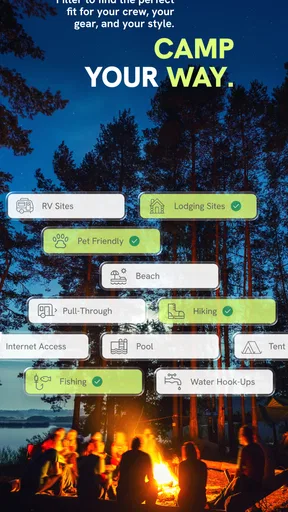
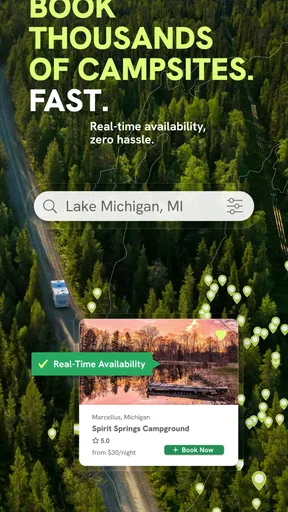
- Easy campground discovery with map-based search and useful filters.
- Detailed listings include amenities, photos, site types, and availability.
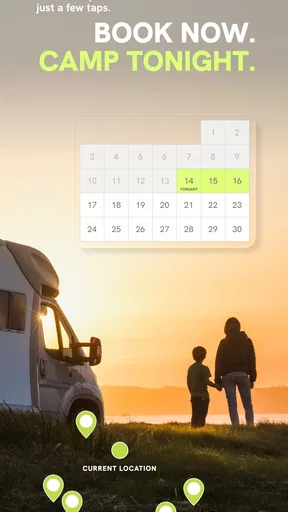
- Booking can be completed directly in the app.
- Helpful for comparing campgrounds across different destinations.
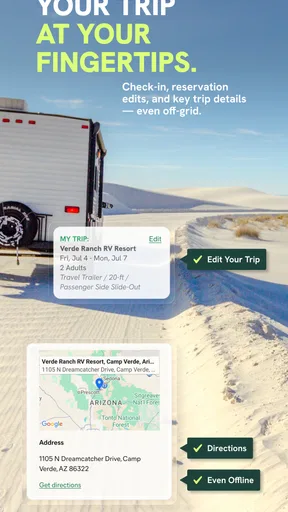
- Saves trip details and reservations for convenient access on the go.
Limitations of Campspot: RV & Tent Camping
- Coverage and campground selection may vary significantly by region.
- Some listings may have limited photos or incomplete site information.
- Prices can change with seasonal fees, taxes, or campground charges.
- Popular sites may sell out quickly, especially during peak travel periods.
- Cancellation and refund rules depend on each individual campground.
Similar Picks in This Category
View All
Google Maps
Google LLC3.4

Google Maps Go
Google LLC4.1

Booking.com: Hotels & Travel
Booking.com Hotels & Vacation Rentals4.8

Google Earth
Google LLC3.8

Skyscanner Flights Hotels Cars
Skyscanner Ltd4.8

trivago: Compare hotel prices
trivago N.V.4.4
Frequently Asked Questions
What is Campspot: RV & Tent Camping used for?
Campspot is a camping reservation app designed to help users discover and book campgrounds, RV parks, cabins, and tent sites. You can browse destinations, compare available accommodations, review campground details, check amenities, and select dates before making a reservation. It is especially useful for travelers planning road trips, family camping holidays, or short outdoor getaways.
Can I use Campspot to book both RV sites and tent campsites?
Yes. Campspot supports several types of outdoor accommodations, including RV sites, tent sites, cabins, cottages, and other lodging options offered by participating campgrounds. Availability depends on the property and selected dates. Before booking, carefully review the site description, hookups, maximum vehicle or tent capacity, length restrictions, and included facilities to ensure the option matches your camping setup.
Are campground prices and fees clearly shown in the app?
Campspot generally displays the nightly rate and reservation details during the booking process, but the final total may also include taxes, booking charges, resort or facility fees, and optional extras. Prices can vary by season, weekend, holiday, accommodation type, and campground policy. It is important to continue through the checkout summary and read the complete price breakdown before confirming payment.
Can I cancel or modify a reservation made through Campspot?
Cancellation and modification options depend mainly on the individual campground’s policies rather than a single universal Campspot rule. Some reservations may allow free cancellation until a specific deadline, while others may be partially refundable, nonrefundable, or subject to change fees. Check the property’s terms before booking, and use the reservation management tools or contact support if your plans change.
Is Campspot reliable for finding campground amenities and site information?
Campspot provides useful property information such as campground descriptions, photos, amenities, site types, rules, and location details. However, the accuracy and level of detail can vary between listings because information is supplied by individual properties. Before traveling, verify important requirements directly with the campground, including pet rules, check-in times, road access, hookups, Wi-Fi availability, and seasonal facility closures.
